How to Start a Custom Suit Business: The Factory Side
To start a custom suit business without building a workroom, agree five things with a suit factory before you take paying orders: what you sell, which order track you use, who supplies the cloth, how your shop records fit, and how the sample suit is checked. Settle them in that order, because each answer changes the quote and the cloth quantity for the next one.
What you need before you call a factory
A factory can quote a track and a cloth quantity once it knows what kind of shop you run and which garment you lead with. A message that says "we want to sell suits" gets a general reply. A message that names a two-piece suit, a short list of cloths and the kind of customer you fit gets a reply you can price from.
We make for overseas custom shops, MTM shops and private-label brands.
How to prepare, step by step:
- Pick one lead garment. Start with a two-piece suit. Jackets, trousers and waistcoats sold separately can follow once the suit is selling.
- Choose a small group of cloths. A short range is easier to source, easier to show in a fitting, and easier to reorder when a customer comes back.
- Decide how you meet customers. A fitting room, trunk shows, or online orders with a measuring guide each change who takes the measurements and how they reach the factory.
- Name the person who measures. One trained person, or a written method every staff member follows, keeps the numbers consistent from order to order.
A custom shop does not have to cut and sew in-house. A made-to-measure factory can cut and make to the measurements your shop sends, which leaves your time for fittings, cloth advice and customers.
Made to measure or bulk: pick your order track
When starting a custom suit business, the order track is the next decision. Both of our published tracks are made to order: MTM from 1, and bulk from 50.
The track decides how an order is quoted and how much cloth it needs. An MTM order is built from one customer's measurements. A bulk order is one style made across a set of sizes. Mixing the two in one brief makes both the quote and the cloth estimate unreliable.
| MTM track | Bulk track | |
|---|---|---|
| What one order is | One garment for one customer, cut to that customer's measurements | Several pieces of one style, made across a size range |
| Shops that usually choose it | Custom tailor shops and MTM shops taking individual fittings | Private-label brands and shops stocking a house style |
| What the shop sends | Measurements per customer, cloth choice, style options | One style specification, a quantity per size, cloth choice |
| Our starting quantity | MTM from 1 | Bulk from 50 |
How to choose: a shop that sells through fittings usually starts on MTM, because each order already arrives as one person's measurements. A brand planning a house style in fixed sizes looks at bulk. Some shops run both, with MTM for fitting customers and bulk for a core style kept in stock. Read more on our private label and MTM order tracks, and on how bespoke and made-to-measure suits differ.

Who supplies the cloth
The cloth decision changes who holds the stock, who pays to ship it, and how each order is priced. In the trade there are two common arrangements. The factory sources the cloth, or the shop buys the cloth and sends it to the factory to be cut, made and trimmed (CMT).
Three questions usually settle it:
- Do you already buy from a cloth merchant or a mill? If you do, sending your own cloth keeps your range the same across every order.
- Do your customers ask for a named cloth? If they choose from a specific book or mill, you control that supply more directly when you buy it yourself.
- Will you start with small quantities? Shipping a short length for each single suit adds a shipment and a step to every order. Asking the factory to source the cloth can make the early months simpler.
How to put it in the order: write who supplies the cloth, the cloth reference, the width, and whether the cloth is for a sample or a bulk run. Before you ship any cloth, read our guide on sending your own cloth (CMT).
Measurements: decide how your shop will record fit
A factory reads each number as one kind of reading. A body measurement still needs ease added when the pattern is cut. A garment measurement, taken from a suit that already fits, already includes that ease. If a shop mixes the two without saying which is which, ease can be added to a number that already contains it, and the suit comes out too large.
Send body measurements, the measurements of a garment that already fits, or changes to a try-on size, and mark which kind each number is, so that ease is added once and not twice.
Our guide to body measurements vs garment measurements goes through the labelling point by point.
How to set this up in your shop:
- Body measurements: taken with a tape on the customer, over a shirt, at points your staff are trained to find the same way each time.
- Garment measurements: taken flat from a jacket or trousers the customer already likes the fit of, point by point.
- Try-on size changes: the customer tries a set size, and you record each change against that size, such as sleeve shorter or waist in.
Choose one method per customer, write its name at the head of the order, and keep each customer's readings and fitting photos on file. The next order and any alteration then start from the same numbers.
Your first sample suit
A sample suit tests the whole chain in one garment, from your measurements, cloth choice and style options to the factory's make, before you take paying orders or commit to a bulk run.
Samples 7–14 days; production 14–21 days. Production takes 14–21 days from the day we have received both your order and the fabric. Shipping time is not included. For more on sample and production days, see how long a custom suit takes.
Use this checklist for the sample:
- Before you send the order. Name the track: MTM or bulk.
- Say who supplies the cloth and give the cloth reference.
- Mark the kind of every measurement: body, garment, or try-on size change.
- List the style options: lapel, buttons, vents, pockets, lining and trouser finish.
- When the sample arrives. Try it on the person whose measurements you sent, or lay it flat against the garment measurements.
- Measure the main points and compare each with the number you sent.
- Photograph the fit from the front, side and back, and write down each change.
- Before you confirm production. Send the changes in the same format, again marking which kind each number is.
- Confirm the cloth for production and, for bulk, the quantity per size.
- Confirm that the style options match the approved sample, or list what changes.
For a worked example of what goes into a sample request, see this MTM sample brief for a UK tailor shop.
Who we are and how to start
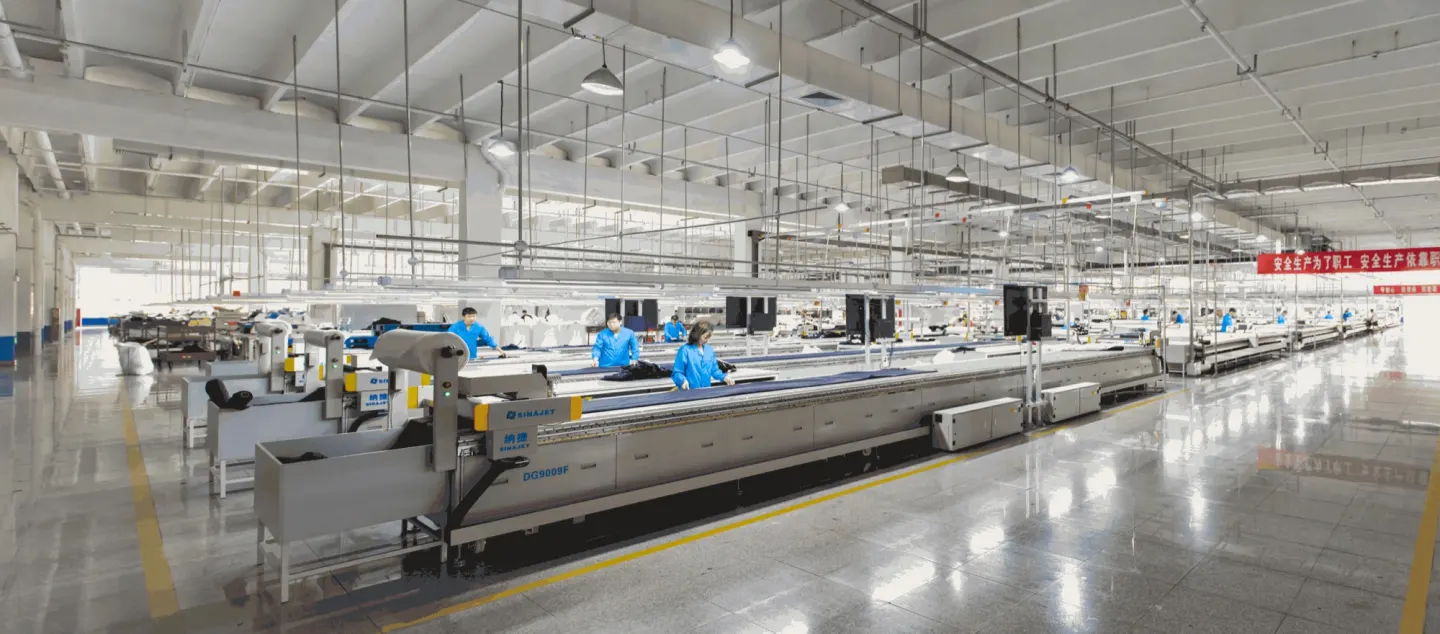
Photos from our workshop in Baodi, Tianjin show the cutting room, sewing line and workstations a new shop would be ordering from.
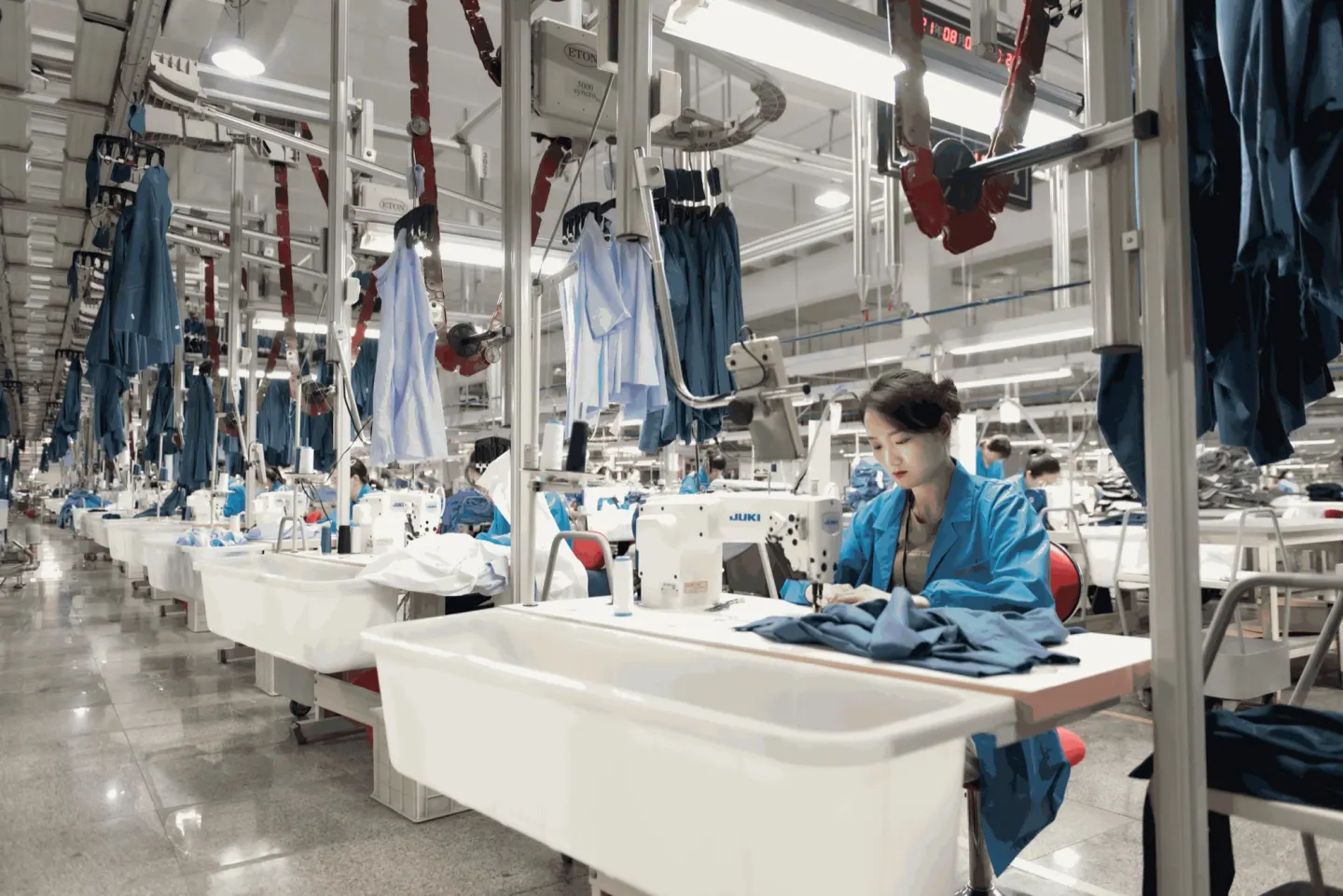
Shi Yuan (Shi Yuan Suit Factory) is a suit factory in Baodi District, Tianjin, China. Our legal name is Tianjin Shiyuan Tongchuang Technology Co., Ltd. We have 200 employees. Factory visit address: Building 3, Park 2, Chengxingwang Zhigu, Jingjin Zhongguancun Science Park, Baodi District, Tianjin, China.
How to start with us:
- Tell us your shop format, your lead garment and the track you have in mind.
- Request a quote or a sample suit, with the cloth decision and the measurement method.
- Message us on WhatsApp at +65 8013 8838, or email houzhenying226@gmail.com.
To compare factories before you decide, read about choosing a made to measure suit manufacturer in China.
Questions shop owners ask
Do I need my own workroom to start a custom suit business?
A made-to-measure factory can cut and make to the measurements your shop sends. Your shop then handles fittings, cloth advice and the customer relationship.
What is your minimum order?
Both of our published tracks are made to order: MTM from 1, and bulk from 50.
How long does a sample suit take?
Samples 7–14 days; production 14–21 days. Production takes 14–21 days from the day we have received both your order and the fabric. Shipping time is not included.
What measurements should my shop send?
Send body measurements, the measurements of a garment that already fits, or changes to a try-on size, and mark which kind each number is, so that ease is added once and not twice.